
Casinos That Accept iDEAL in the UK: What to Check
 Available in GB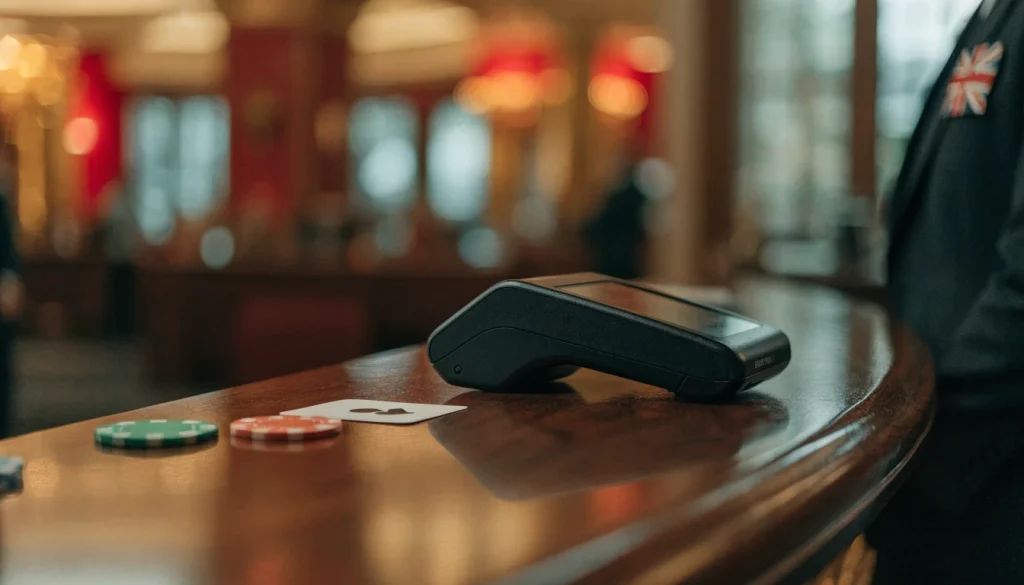
Availability can depend on the operator and account, so a payment-page listing alone does not confirm a working UK option.
Does iDEAL Still Belong in the UK Casino Cashier?
The phrase “casinos that accept iDEAL in the UK” sounds like the name of an established category. It is better treated as a question about a particular cashier, at a particular time. A payment logo on a general casino page is not the same thing as a working option for a UK account, and a method familiar from elsewhere cannot be assumed to have crossed into this market.
That distinction matters because casino payment pages are often read as lists of promises. In practice, a method’s presence can depend on the operator and the account using the cashier. The useful test is not whether a casino has a polished payments page, or whether an old comparison mentions a familiar name. It is whether iDEAL appears as a selectable option in the current cashier for the relevant account, with terms that explain what the option can do.
Without that direct confirmation, a list of “all iDEAL casinos” would claim more than it could establish. A search result can preserve an old description long after an operator’s cashier has changed. A payment method may also be confused with another route that sounds similar or serves a related purpose. Those are not small editorial errors: the difference becomes visible only when a player tries to make a transaction.
There is a more firmly documented baseline for UK casino cashiers. Debit cards are commonly accepted, including Visa and Mastercard. A specialist review may list those card brands for a site, but a general listing still does not settle whether they are currently available to a UK customer or whether a particular card product is eligible. The cashier is where that distinction becomes concrete.
That baseline should not be stretched into an answer about iDEAL. Visa and Mastercard being named on a casino payment page does not show that iDEAL is accepted there; nor does a general payment list establish that every listed method is active for every account. Each claim belongs to its own method and its own current availability. Familiarity is not evidence.
Casinos That Accept Instadebit in the UK
The same caution applies to searches for the best, newest or bonus-bearing casinos associated with iDEAL. Those descriptions combine separate questions: whether a casino offers the method, whether it is available in the UK, whether the account can use it, and whether a promotion recognises a deposit made that way. A brand name or promotional page cannot answer all of them at once. In particular, an attractive bonus label does not confirm that a payment option is present in the cashier.
Android does not change the underlying test. A mobile casino site or app may present the same account and cashier in a smaller frame, but the device is not proof that a specific payment method is supported. The relevant evidence remains the live list of options shown to the account, rather than a headline promising compatibility or a third-party list whose date and scope are unclear.
There is a cultural reason these labels travel so easily. Payments are often discussed as if they were portable objects: once a name is known, it seems natural to expect it wherever online commerce appears. But a cashier is less like a universal menu than a local arrangement between an operator, its payment providers and the account being served. A name printed on one page does not make it part of every other arrangement.
So the question “Are iDEAL casinos still available in the UK?” cannot responsibly be answered by turning the wording into a directory. The label alone does not establish current UK casino support, and the documented card options do not fill that gap. A specific casino’s current cashier is the place where an iDEAL option would need to be plainly present before the claim could be relied on.
That is a narrower answer than a ranked list, but a more useful one. It keeps a documented payment route separate from an unconfirmed claim and avoids treating yesterday’s description as today’s cashier. In payments, the small print is the product.
When iDEAL Is Missing, the Payment Route Matters
A casino cashier is less like a universal till than a map of the routes an operator has chosen to support. One site may show a bank transfer; another may offer an e-wallet or a prepaid voucher. The names on that screen describe the available route at that particular operator. They do not establish that the same service will appear elsewhere, or that any of them is an iDEAL connection.
Debit Cards
Visa and Mastercard are common options, though availability depends on the operator’s live cashier.
Bank Transfers
Funds move via bank account or open banking, potentially providing instant deposits and fast withdrawals.
E-wallets
Services like Skrill, Neteller, and PayPal route funds through a provider account.
Prepaid Vouchers
Options such as Paysafecard are generally restricted to deposits only.
For UK casino accounts, debit cards are among the documented options. Visa and Mastercard are familiar examples, though their appearance in a general payment list is not proof that every card product will work at every cashier. The operator’s live cashier is where current availability is shown. Card deposits belong to a wider payment picture, rather than providing evidence that iDEAL is supported.
A bank transfer is a different kind of route: money moves through a bank account rather than a card network. Open banking can also connect a payment to a bank account, with the customer approving the transaction through a banking service. Specialist reviews describe open banking and bank transfers as capable of providing instant deposits and fast withdrawals at many sites. That is a report about the services they examined, not a promise that every casino offers those routes or processes them at the same pace.
The distinction matters because payment labels can make unlike things appear interchangeable. A bank transfer, an open-banking service and a card may all lead from a bank account to a casino balance, but they are not the same service. A cashier listing one does not imply the others are available. Nor does a shared function make any of them a verified substitute for iDEAL.
E-wallets add another layer. They hold or route funds through an account with a payment provider, rather than presenting themselves as the customer’s bank account or card. Skrill and Neteller appear at some casino sites. A specialist review of UK-facing casinos describes Skrill as one of the more common deposit methods in that market in 2026; the same kind of review notes that Skrill and Neteller are often excluded from promotions. Such observations are time-sensitive and operator-specific. An e-wallet’s presence in the cashier does not settle whether a particular deposit meets a promotion’s terms.
UK Casinos That Accept E-Wallets: Payment Guide
PayPal is another named wallet, while Apple Pay is accepted for deposits at some UK Gambling Commission-licensed casinos. These examples illustrate how the cashier may offer routes shaped by different payment systems: a wallet account, a phone-based payment service, a bank connection or a card. They should not be read as a universal menu. Availability depends on the operator, and a deposit option should not be assumed to work for withdrawals as well.
Prepaid vouchers occupy a narrower place. Paysafecard is deposit-only, so its presence does not describe a complete route for moving money in both directions. That limitation is useful to recognise before treating a payment logo as a general-purpose account service. The method may solve one part of the transaction and leave another to be handled differently.
The cashier’s menu is therefore a practical record, not a catalogue of everything that exists in British payments. Payment services change, and operators can alter what they support. A name listed on a review page may not be available to a particular customer at the point of transaction. The live cashier is more specific: it shows the methods that the operator presents for that account at that time.
Remote gambling licensees serving Great Britain must hold a relevant UK Gambling Commission licence; a payment method does not confer this regulatory status.
There is also a wider boundary around the question of where to deposit. Remote gambling licensees serving Great Britain must hold the relevant UK Gambling Commission licence. A payment method does not confer that status on a casino, just as a familiar brand in a cashier does not establish the operator’s regulatory position. The payment route and the legal standing of the operator are separate matters.
For anyone looking for alternatives to iDEAL, the useful comparison is between the routes actually displayed: card, bank transfer, open banking, e-wallet or prepaid voucher. Each has its own scope, and the cashier’s labels alone do not prove that two methods are equivalent. The quieter work is checking what the operator accepts and what the method is meant to do. A logo is only a beginning.
Deposits, Debit Cards and the Credit-Card Line
A debit card and a credit card can carry the same familiar logo, yet they do not occupy the same place in a British casino cashier. The distinction is not cosmetic. A debit-card deposit draws on money held in the linked account; credit-card payments for gambling are prohibited for UK-licensed casinos. A card brand alone therefore cannot establish whether a particular product is eligible.
Visa and Mastercard appear in a specialist casino review’s list of payment methods, but that does not settle what a given UK cashier will accept today. Availability can change, and card products may be treated differently. The cashier is the practical point of confirmation: its displayed options determine whether a debit card can be used for that account and transaction. A logo in a general payment list is not a promise.
Casinos That Accept Citadel in the UK
That distinction matters when a payment method is described loosely as a “card”. Debit cards are cards, but so are credit cards; the shared shape of the plastic, or the shared brand printed on it, does not make their funding sources equivalent. For a casino deposit, the relevant question is whether the payment is being made from an eligible debit product, not simply whether the card can make online purchases elsewhere.
The UK restriction has a fixed history. The regulator banned credit-card gambling on 14 April 2020, and the rule has not been relaxed. It applies to credit-card payments for gambling at UK-licensed casinos. Nor can the prohibited route be made acceptable by placing another service in the middle: credit-card funding routed through a money service business is also barred. This is a boundary on how gambling is funded, not a preference that an operator may waive when a customer asks.
Wallets do not provide a loophole where they allow credit-card funds to be used for gambling. Remote gambling operators cannot accept those wallet payments either. The important issue is the source of the funds, even if the final step appears to be a wallet balance rather than a card transaction. Payment interfaces can make money look abstract; regulation insists on remembering where it came from.
The phrase “iDEAL debit card” also combines two different ideas. iDEAL is not a Visa or Mastercard debit-card product. A search for casinos accepting iDEAL debit cards may therefore blur a bank-based payment route with card acceptance. Whether iDEAL itself appears in a particular UK casino cashier is a separate availability question; the presence of Visa or Mastercard does not answer it. Nor does a debit-card listing establish that an iDEAL payment is supported.
Credit Card Ban
Credit-card payments for gambling are prohibited for UK-licensed casinos, including funds routed through money service businesses or wallets.
This distinction carries through to searches for casino deposits by card. A casino may display a card brand while still requiring a specific card type, or may not offer that route to a particular customer at all. The relevant details are those shown in the cashier, rather than assumptions drawn from a brand name or from another operator’s payment page. For UK-licensed sites, the credit-card line remains clear; the debit-card answer is specific to the cashier.
The rule reflects a judgement about the relationship between borrowing and gambling: access to credit should not be folded into a wager simply because a payment network can process it. That leaves debit cards within a different category, but not automatically available at every site. Small distinction. Big consequence.
Mobile Slots and the Rules of the Spin
A slot does not become a different kind of game when it moves from a desktop screen to a phone. In Britain, the rules governing online slots follow the play itself: a mobile interface cannot offer a faster or less constrained version of a spin. The small screen changes the arrangement of buttons, not the regulatory boundary around them.
Autoplay is banned for online slots in Britain. A player cannot set a game to repeat spins automatically while attention moves elsewhere; each spin has to be started individually. The rule makes the player’s action part of the game’s pace, rather than allowing a sequence to run on unattended. It also means that a slot presented as especially effortless on a phone still cannot turn into a continuous, self-running reel.
Casinos That Accept Interac in the UK: How to Check
There is a minimum duration, too. Each online slot spin must last at least 2.5 seconds. That interval is not a promise that every round will feel slow: it is a floor beneath which the game cannot compress the cycle from start to result. On mobile, where a thumb can summon the next spin with little movement, the pause matters. A few seconds can seem modest; the point is that the interface cannot remove them.
The same British rules apply whether a slot is opened in a browser or through a mobile app. Nor does a payment label attached to a casino alter how its slots may operate. A search for real-money slots on a particular payment route concerns the cashier; autoplay and spin duration concern the game. They are separate questions, even when both meet on the same screen.
Stake limits also form part of the setting in which online slots operate. The maximum stake per game cycle is £2 for customers aged 18 to 24 and £5 for those aged 25 and over. The higher limit took effect on 9 April 2025. These are limits on the stake for a game cycle, not a measure of what a session will cost or return.
The distinction matters because “mobile slots” is a description of access, not a separate regulatory category. A compact layout may make the game feel immediate, and a quick tap may make the next round appear close at hand. But a licensed operator serving Great Britain must keep the same restrictions in place across devices. The rules do not shrink with the screen.
That framework reflects a particular judgement about gambling: the product may be available in private, on a device carried everywhere, but its pace is not left entirely to design choices. The law interrupts the frictionless sequence. Not much of a pause. Still a pause.
Slot Regulations
- Autoplay is banned for online slots in Britain.
- Each spin must last at least 2.5 seconds.
- Maximum stakes are £2 for ages 18–24 and £5 for ages 25+.
- Rules apply equally across desktop, browser, and mobile apps.
Real-Money Slot Play and the First Deposit
Real-money slot play begins, in regulatory terms, before the first wager. A UK Gambling Commission-licensed remote operator must prompt a new customer to set a financial limit before accepting that first deposit. The prompt is part of opening an account for gambling, not a special condition attached to one game or payment brand.
That requirement gives the first deposit a small but important pause. A casino may present slots through a website or an app, and a search for real-money play may focus on a particular game or way to pay. But the account-level step remains: the customer must be prompted to establish a financial limit before money is deposited. The rule applies to the operator’s remote gambling service, rather than to a slot title viewed in isolation.
The distinction matters because “real money” can make a game sound like the whole transaction. It is not. There is an account around the game, and the operator must make controls available there. UKGC rules require accessible account-level limit controls as well as the pre-deposit prompt. They are not merely a box that appears once and then disappears from view.
A limit is a boundary set within the account. Its practical role is to give the customer a way to place a financial constraint on gambling activity. The exact controls and the way an operator presents them can vary; the underlying obligation is that account-level controls must be accessible. The rule does not turn the slot itself into a budgeting tool, nor does it make a payment method a substitute for setting a limit.
Casinos That Accept POLi in the UK: Availability Checks
This is a particular kind of protection: procedural rather than theatrical. It does not promise that gambling will be harmless, or that a chosen limit will suit every household. It requires the operator to put a financial decision in front of a new customer before the account receives its first deposit, and to leave controls available at account level. A modest intervention, with a clear order of events.
That order also helps separate a legitimate real-money casino account from the loose language surrounding “free” and “real-money” slots. A game label cannot establish how an operator handles account limits. Nor does a payment label establish that the financial-limit prompt has been provided. Those are separate matters, even when a casino’s interface compresses them into the same journey from registration to play.
For anyone considering an online casino for real-money slots in Britain, the relevant sign is not simply that a game can be opened or that a cashier accepts a deposit. The operator must be licensed for the British market, and its account process must include the required prompt before the first deposit, alongside accessible account-level limit controls. The safeguard sits before the spin. A quiet checkpoint.
A Deposit Is Not a Withdrawal
A payment button can make money travel in one direction without making the return journey equally simple. In a casino cashier, a successful deposit confirms only that the chosen route can fund the account. It does not, by itself, establish that the same route will be available for a withdrawal, or that a payout will arrive as quickly as the deposit did.
A successful deposit does not guarantee that the same route is available for withdrawals or that payouts will be processed with the same speed.
For UK gambling accounts, the distinction is shaped by anti-money-laundering controls. Payouts are commonly returned to the original payment source: a safeguard intended to make it harder to move funds through a gambling account and divert them elsewhere. This is often described as a closed-loop arrangement. The principle is straightforward; its administration can be less so when a payment service cannot receive a withdrawal, or when the account details do not match the customer’s.
In those circumstances, another route may be considered, but a change of destination can bring extra checks. The operator may need to establish that the alternative account belongs to the same person and that the request fits its procedures. Keeping the casino account information and payment route under the same customer’s name reduces avoidable questions about ownership. It does not remove the operator’s duty to check the transaction.
The first withdrawal can be a particularly slow point in the relationship between player and casino. A specialist casino review notes that processing includes the operator’s own approval, and that an initial request may take longer while verification is completed. That is not simply money moving through a bank: the casino has an internal decision to make before the payment is released. If identity or payment ownership still needs confirming, the queue has another reason to pause.
A deposit described as instant therefore says little about the eventual payout. The cashier’s entry point and the withdrawal process are separate parts of the account, with different checks and, potentially, different routes. An iDEAL deposit, where a casino actually offers one, would not by itself prove that iDEAL could also be used to cash out. Nor does a deposit option establish that an operator accepts the method for UK customers. The distinction matters more than the label.
Casinos That Accept USDC in the UK: What to Check
Before treating a payment method as a complete route, its withdrawal rules need to be read alongside the deposit instructions. The operator’s cashier or payment terms should explain how returns are handled and what verification may be required. Where the original source cannot receive funds, an alternative may involve further checks rather than a simple switch.
Money enters readily. Returning it is another matter.
Bonus Terms and the Payment Method
A payment option can work at the cashier and still fail to qualify a deposit for a promotion. The distinction is easy to miss: the cashier answers whether money can be paid in, while the offer’s terms decide whether that transaction counts towards a welcome offer or a slots promotion. Neither the method’s familiarity nor the presence of a bonus code settles the question.
A specialist casino review describes PayPal as valued for speed and convenience, while noting that it may be excluded from bonus eligibility. That is a report about the conditions covered by that review, not a rule that applies to every casino. The operator’s own promotion terms are the relevant place to establish whether a particular PayPal deposit qualifies.
The same caution applies to Skrill and Neteller. A specialist review reports that these e-wallets are offered at some sites and are often left out of promotions. “Available” and “eligible” are separate labels, even when they appear beside each other in a cashier or offer page. A deposit made through an excluded method may still reach the account; it simply may not activate the promotion attached to another payment route.
Do
- Check the specific promotion terms for eligible payment methods.
- Confirm if a bonus code is required for activation.
- Verify the method in the live cashier before depositing.
Don’t
- Assume a familiar payment method qualifies for a bonus.
- Treat a bonus label as confirmation of payment availability.
- Rely on general review reports as absolute rules for every casino.
This matters for offers described as a welcome bonus, a slots bonus or a no-deposit bonus. Those labels describe different promotional arrangements; they do not establish that every payment method qualifies, or that an offer is currently available at a particular casino. A bonus code, where one is required, does not override a payment-method exclusion. The terms can also specify how the offer is activated, so the wording should be read as a condition of the promotion rather than decoration around it.
The same separation matters when looking for casinos said to accept iDEAL. A search for iDEAL casinos with a welcome bonus does not establish that a UK casino accepts iDEAL, or that an iDEAL deposit would qualify for any promotion. Both points would need to be confirmed independently: first in the casino’s cashier, then in the terms for the specific offer. A method appearing in one place is not proof of eligibility in the other.
The small print is doing real work. Before a deposit, the useful checks are the payment method named in the offer terms, any excluded methods, and whether activation requires a code or another step. If the terms are unclear, the promotion should not be treated as attached to the deposit. Familiarity is not eligibility.
Minimum Deposits, Limits and the Small Print
A minimum deposit is a threshold set for a particular payment route, not a universal entry price for a casino account. A specialist casino review puts the commonly stated starting range at £10–£20, with the amount depending on the selected method. That is a reported range, not a promise that every cashier will offer either figure: the operator’s terms and the payment screen determine what applies to an individual transaction.
Casinos That Accept Giropay in the UK
This distinction matters when a low figure appears in a search for an iDEAL casino deposit. A £5 minimum cannot be assumed simply because it would suit a small first payment. Nor does a stated minimum for one route establish that iDEAL is available at that casino. The cashier has the final say, and its displayed options and thresholds are more relevant than a general headline.
The lower boundary gets the attention; the upper ones are easier to overlook. Deposit ceilings may apply per transaction, per day or per month. A specialist review reports that these maximums can differ according to payment method and account status. The distinction is practical: a route that permits a modest payment may have a different transaction ceiling from another, while an account’s status can affect the limits shown. No single maximum can sensibly be carried across every method and operator.
The cashier and the account terms should therefore be read together. One may show the amount accepted for an immediate transaction; the terms may explain wider daily or monthly restrictions. If those details do not match a planned deposit, the discrepancy is a reason to pause rather than assume the higher figure will be processed. Small print is not decorative here.
A mobile cashier does not change the underlying limit. It may present the same account and payment controls in a smaller interface, but the amount shown still belongs to that operator and route. Before confirming a deposit, the stated minimum and any relevant maximum should be clear. For iDEAL in particular, a figure attached to another payment method says nothing about its availability or its own limits.
Understanding Deposit Limits
A minimum deposit is a threshold for a specific route, not a universal price. Additionally, deposit ceilings may apply per transaction, per day, or per month, and these maximums can vary based on the payment method and account status.
These thresholds are administrative boundaries, not guidance on how much to gamble. The useful figure is the one the casino actually displays for the selected route and account—not a number borrowed from a different cashier.
Comparing Alternative Payment Costs
A payment method can look inexpensive because its charge is visible and easy to read. That is only one part of the transaction. A specialist payment review notes that costs may arise from the casino, the payment provider, the card issuer or bank, currency conversion, and the network carrying the payment. Which of these applies depends on the route and the transaction.
That is why there is no single cheapest alternative to iDEAL for every UK casino deposit. A route with no displayed casino fee may still involve a provider charge or a bank cost. If the account and payment are in different currencies, the exchange rate matters too: the conversion spread can outweigh a flat fee that appears more obvious. The quiet cost is not necessarily the smaller one.
A fair comparison starts with the amount that will leave the account and the amount that will arrive in the casino balance. The difference is the useful figure, not the label attached to one line of the cashier. If currency conversion is involved, the rate and any spread belong in that calculation. If a bank, card issuer or payment network may charge separately, those terms need to be considered as well. The specialist review’s warning is practical rather than dramatic: a low visible charge does not establish a low total cost.
The cashier’s displayed terms are only part of the picture where a third-party provider or bank sets its own charges. The same method can therefore look different across accounts, currencies or transaction circumstances. A comparison made for one deposit should not be treated as a permanent ranking.
For anyone weighing iDEAL deposit alternatives in the UK, the sensible measure is the total cost of the specific route, in the account’s currency, before confirming the transaction. No method earns the word “cheapest” by reputation alone. The arithmetic decides.
Casinos That Accept Revolut in the UK: Payment Guide
iDEAL and Casinos Outside GamStop: What the Evidence Can Say
A casino described as “outside GamStop” and one that accepts iDEAL are being classified on different grounds. GamStop concerns self-exclusion; iDEAL is a payment method. One label does not establish the other, and neither tells much about the operator’s legal status by itself.
There is no substantiated basis to name UK-facing casinos as both outside GamStop and accepting iDEAL. Nor is there a demonstrated link between iDEAL availability and an operator’s connection to a self-exclusion scheme. Claims combining the two should therefore be treated as claims, not as a dependable directory.
The more important distinction is regulatory. Remote gambling operators selling into Great Britain must hold a UK Gambling Commission licence, wherever they are based. A site operating outside that system does not become a lawful UK casino merely because it accepts a familiar payment method, or because it is described as not connected to GamStop. Payment rails do not confer a licence.
That separation matters for self-exclusion, too. UKGC-licensed casinos must provide responsible-gambling tools, including self-exclusion. A site outside the UKGC system is outside that regulatory framework; its own statements about exclusion arrangements are not equivalent to UKGC oversight. The Gambling Act 2005 governs gambling in England, Wales and Scotland, while Northern Ireland has a different legal framework.
The phrase “not on GamStop” can make an operator sound like a small variation on a familiar service. It may instead point to a site beyond the protections and obligations attached to a UK licence. That is not a payment detail.
An iDEAL logo or cashier entry, even if encountered on a particular site, would answer only a narrow question about the payment route. It would not establish that the operator is licensed for Great Britain, that it is outside a particular exclusion scheme, or that the two claims have been independently confirmed. The distinctions are less exciting than the combined label. They are more useful.
What is the fastest withdrawal method for UK casinos?
PayPal, open banking services and debit cards linked to fast payout systems are generally among the quickest. The casino’s approval process and your verification status also affect how soon the money arrives.
Which payment methods are accepted in Great Britain?
UK casino cashiers commonly offer Visa and Mastercard debit cards; some also support PayPal, open banking, bank transfers, Skrill, Neteller, Paysafecard or Apple Pay. Availability varies by casino and account, so check the cashier.
Can I deposit in GBP?
Yes, GBP is supported. Check your account currency before depositing to avoid conversion costs.
Which method has the lowest fees?
There is no universally cheapest method. Compare the casino’s charges, provider or bank fees, currency conversion spread and any network costs for the amount you plan to deposit.
Is Skrill available?
Yes, Skrill is offered at some UK-friendly casino sites and remains a common deposit method. Check the casino’s cashier and whether Skrill deposits qualify for promotions.
Top online casinos in the UK
- AmunbetBonus: Join now and get 450% up to 2,700 GBP + 450 FS · Payout speed: 1-3 business days
- ZombillionBonus: Welcome Pack 250% up to £4000 + 200 FS · Payout speed: 1-3 business days
- NightLuckBonus: Welcome Pack + 805% Up To 6400€ + 280 FS · Payout speed: 1-3 business days
- WinBeastBonus: €5000 + 500 FS + €650 Freebet · Payout speed: 1-3 business days
- x3betBonus: Welcome Pack 100% Up to £1.000 + 200 Free Spins · Payout speed: 1-3 business days
- JetsetspinsBonus: 200% Bonus + 100 Free Spins + Free Royal Wheel · Payout speed: 1-3 business days
- SpinFormulaBonus: 550% Up To £15,000 + 550 FS · Payout speed: 1-3 business days
- BritsinoBonus: Welcome Package – Get your £2,200 + 2,000 FS · Payout speed: 1-3 business days