
Live Roulette UK with English-Speaking Dealers
 Available in GB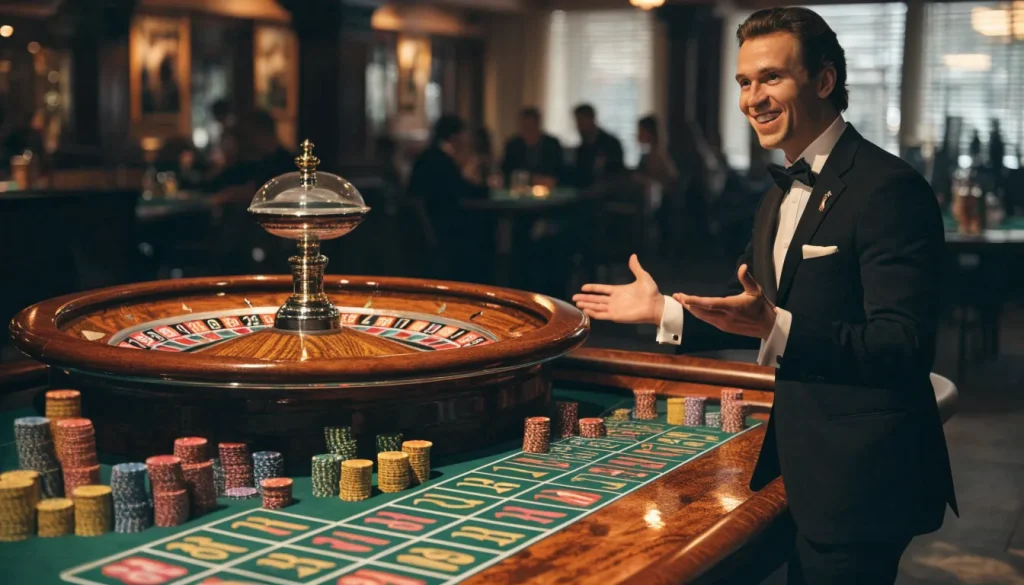
The guide explains how licensing, live studios, table rules, payment limits and promotion terms shape roulette play in Great Britain.
A Roulette Casino Is Also a Licensed Business
A roulette casino is not simply a wheel made available on a screen. In the real-money setting, the game sits inside a business that accepts customers, provides access to gambling and is answerable to a regulator. That distinction matters: a polished roulette interface, whether automated or presented with a live dealer, does not by itself establish that the company behind it is authorised to serve customers in Great Britain.
The UK Gambling Commission oversees commercial gambling in Great Britain and regulates online casino activity. Its role is not tied to the building in which a company is based, or to the studio transmitting a live table. Remote operators offering gambling to people in Great Britain must hold the relevant Commission licence even when the equipment that runs or broadcasts their service is elsewhere. The rule follows the market being served, not the geography of the machinery.
That is a rather modern form of jurisdiction: the table may appear to be in a studio abroad, while the legal responsibility remains attached to the business offering the game to British customers. A live dealer can make the experience feel located in a particular room, with a person announcing play and a camera following the wheel. Regulation looks past that scenery to the operator and the service it provides.
A UK roulette casino therefore has two identities. It is a collection of games, and it is a licensed operator conducting commercial gambling. The first identity is what appears on the screen; the second determines whether the service belongs within the British regulatory system. The distinction can be easy to miss when a site’s branding, design and table presentation draw attention away from the company responsible for them.
The Gambling Commission issues operating licences to businesses and personal licences to individuals who perform relevant roles in the industry. These are not interchangeable credentials. An operating licence concerns the company’s authority to provide gambling; a personal licence concerns an individual’s regulated role. For someone assessing an online casino, the company’s operating status is the central question. A dealer’s presence on camera, or a provider’s name beside a game, cannot substitute for it.
Mines Casino Game in the UK: Rules and Play
The Commission’s public register is the place to check that status. A useful check is not merely to notice a licence badge or a line of text in a website footer, but to search the register for the operator and confirm that the entry corresponds to the business behind the site. Where a licence number is displayed, it should be checked against the register before any deposit. Branding can be changed, reused or presented by a third party; the public record gives a firmer basis for identifying the licensed business.
This is especially relevant when the visible name of a roulette site differs from the company that operates it. A casino brand may be the public face, while another legal entity holds the licence and carries responsibility for the service. The register helps connect those names. If that connection is unclear, the appearance of a live table does not resolve it. Glass, cameras and a dealer’s measured announcement make compelling theatre; none is a regulatory document.
The UK Gambling Commission is the sole regulator for commercial gambling in Great Britain. Its authority covers remote gambling offered to consumers there regardless of where the relevant equipment is situated. That framework is not a certificate for every website that can be reached from a British connection. It is a requirement on operators selling into the market: the relevant licence must be held by the business providing the gambling service.
The legal background is the Gambling Act 2005, which governs gambling in England, Wales and Scotland, while Northern Ireland has a separate legal framework. So “UK roulette casino” is common shorthand, but the licensing question for Great Britain is specifically whether the operator holds the relevant UK Gambling Commission authorisation. Careful wording matters here. A company’s overseas address does not remove its obligation to be licensed when it offers remote gambling to Great Britain consumers.
Attention: A company’s overseas address does not remove its obligation to hold a relevant UK Gambling Commission licence when offering remote gambling to Great Britain consumers.
The live-dealer setting does not create a different category of operator. Whether roulette is generated by software or streamed from a studio, the business making the game available to customers remains responsible for offering it under the appropriate licence. The visual difference is substantial: a live stream gives the game a human presence, while an automated table removes that layer. Legally, however, both remain part of the remote gambling service.
A roulette table can be genuine in every visible sense and still leave the more important question unanswered: which business is offering it, and under what authority? The register supplies the sober answer. In gambling, the scenery is not the licence.
The Live Casino: Dealers, Studios and the Games Around the Wheel
A live roulette table is not merely a digital wheel with a human face added to it. The game arrives as a broadcast: a camera shows a dealer at work, while software carries the picture and the table interface to a screen. The dealer’s presence changes the texture of the experience. A hand reaches for the wheel; a voice marks the pace; the room has a visible centre of attention. The familiar mechanics remain, but the presentation belongs to a shared performance rather than a private animation.
That distinction matters in an online casino with roulette. An automated game can render a wheel and result without showing anyone operating it. A live table places a person between the physical equipment and the remote audience. The dealer is not simply decoration. Their movements make the progress of a round legible, and their speech gives the stream a social rhythm. Even when the interaction is limited, the table feels less like a sequence of isolated clicks and more like a small public event.
Online casino without ID in the UK: what it means
The studio is arranged for that purpose. Light, camera position and the dealer’s place at the table all help keep the action visible. A roulette wheel occupies the visual centre, while the dealer’s hands and gestures guide attention around it. The background may suggest a casino floor or present a more controlled studio environment; either way, the image is designed to make the table readable on a screen. Nothing in that arrangement requires a grand room. The essential set is the table, the wheel, the camera and the person who brings them into view.
English-speaking dealers add another layer to the broadcast. Their commentary helps mark transitions and gives the table a sense of continuity, especially for people who prefer spoken cues to a silent interface. The voice is part of the service’s atmosphere, but also part of its practical presentation: it can make the stream feel more immediate and easier to follow. A dealer’s manner may be warm, brisk or restrained. The role is not to turn a table into theatre, though a little theatricality is hard to avoid when every movement is being watched.
A live casino also gathers different games under one roof, much as a physical casino places several forms of play within the same social landscape. Roulette may sit near card tables, with each stream carrying its own pace and visual language. Blackjack depends on cards and decisions made in view; poker brings its own vocabulary and table culture. Roulette is recognised by its wheel and by the dealer’s handling of the round. These are not interchangeable broadcasts. The person at the table, the equipment and the cadence of the game give each stream a distinct character.
Grosvenor introduced its live casino games in 2013, offering Blackjack, Texas Hold’em, and Roulette as remote events streamed to screens.
There is a history behind that digital room. Grosvenor first introduced its live casino games in 2013, with card and casino offerings that included Blackjack, Texas Hold’em and Roulette. The detail is useful because it places live casino gaming within a longer shift in how established gambling businesses presented their tables: not only as rooms to enter, but as events that could be carried to a remote screen. The wheel did not need to be reinvented for that move. The setting around it did.
The word “live” can suggest unmediated access, but a stream is still a carefully framed view. Cameras select what appears; the interface arranges information around the image; the dealer speaks into a format built for remote participation. That does not make the human element false. It makes the production visible as production. The dealer is present in the studio, while the distant audience encounters that presence through technology. A room becomes a broadcast, and a broadcast becomes the online table.
This format also explains why two roulette experiences can feel different even when the underlying game is recognisable. One may be quiet and formal, another conversational; one may keep the camera close to the wheel, another may give more space to the dealer and the table. The difference is partly technical and partly human. A steady voice, clear gestures and an uncluttered view can make a stream feel composed. A more animated presentation can make it feel sociable. Neither style changes what roulette is; each changes how it is encountered.
Online American Roulette Casinos in the UK: What to Know
For some, the appeal lies in watching a person manage the table rather than seeing a computer generate an animation. For others, the attraction is the modest sense of company: a voice in the room, a face attached to the game, a repeated ceremony shared with unseen participants. It is a peculiar kind of togetherness, made by cameras and screens, but not an entirely empty one. The dealer cannot know the private circumstances of everyone watching. Still, the table gives strangers a common point of attention.
The live casino therefore occupies a middle ground between a game and a broadcast. It retains the visual authority of the real wheel while adapting the table to a remote audience. The dealer’s work, the studio’s framing and the presence of neighbouring games form the experience around the roulette itself. The screen is a window, but also a stage. The distinction is small, until it is not.
Top online casinos in the UK
- AmunbetBonus: Join now and get 450% up to 2,700 GBP + 450 FS · Payout speed: 1-3 business days
- ZombillionBonus: Welcome Pack 250% up to £4000 + 200 FS · Payout speed: 1-3 business days
- NightLuckBonus: Welcome Pack + 805% Up To 6400€ + 280 FS · Payout speed: 1-3 business days
- WinBeastBonus: €5000 + 500 FS + €650 Freebet · Payout speed: 1-3 business days
- x3betBonus: Welcome Pack 100% Up to £1.000 + 200 Free Spins · Payout speed: 1-3 business days
- JetsetspinsBonus: 200% Bonus + 100 Free Spins + Free Royal Wheel · Payout speed: 1-3 business days
- SpinFormulaBonus: 550% Up To £15,000 + 550 FS · Payout speed: 1-3 business days
- BritsinoBonus: Welcome Package – Get your £2,200 + 2,000 FS · Payout speed: 1-3 business days
Roulette Sites and the Slot Rules That Do Not Apply to the Wheel
A casino website may place roulette and slots under the same roof, but the games do not therefore share the same rules. The site is a single storefront; its games belong to different regulatory categories. That distinction matters because protections introduced for online slots in Great Britain are specific to slot play, rather than a general set of limits for everything found in a casino lobby.
Do
- Apply slot stake caps to online slot game cycles
- Observe the 2.5-second minimum slot cycle duration
Don’t
- Apply slot-specific stake caps to roulette or blackjack
- Use autoplay for online slots
A specialist review describes the slot stake caps as £5 per game cycle for players aged 25 and over, and £2 for those aged 18 to 24. The same review says those caps do not cover roulette or blackjack. These are not universal casino spending limits: they concern the amount staked in an online slot game cycle. A roulette table is outside that particular rule, whether the wheel appears as a digital animation or in a live stream.
The distinction reflects the way the games are organised, not how they look on a screen. A slot game advances through its own cycles, while roulette is offered as a table game with its own betting interface and pace. Both may sit beside each other in the same casino lobby, with similar visual polish and a shared account area. That shared setting can make the difference easy to miss. The category, not the lobby design, determines which slot-specific rules apply.
Britain’s slot rules also address the rhythm of play. Autoplay is banned for online slots, and a slot cycle must last at least 2.5 seconds before another can begin. These requirements are aimed at slot mechanics: automated repeat play and the speed at which one cycle follows another. They are not a general clock imposed on roulette rounds. Roulette does not become a slot because it is hosted by a casino site or presented through software.
That separation is worth keeping clear when a site’s menus group games by theme, provider or popularity. A category label is a piece of navigation, not a statement that every game inside it is subject to identical controls. “Live casino” may sit near “slots”; a roulette table may be listed alongside other casino games. The regulatory boundary still follows the game type.
The difference also changes what a rule means in practice. A slot stake cap limits an individual stake in a slot cycle; it does not set the maximum amount a customer can spend across a casino account, nor does it describe the value of a roulette wager. Likewise, the ban on slot autoplay does not mean every form of online casino play must proceed at the same speed. Rules written for one mechanism should not be stretched to cover another.
European Roulette Online in the UK: Wheel and Bets
For someone comparing roulette sites in the UK, this is a useful distinction in reading a casino’s rules and game information, not a shortcut to judging the whole site. The presence of slots and roulette on one page does not merge their regulatory treatment. Nor does the absence of a slot feature tell anything by itself about the roulette table. Different games, different controls.
The wheel keeps its own category.
Roulette as a Game: Table Play Beside the Live Stream
Roulette is organised around a wheel and a betting layout: one presents the moving ball, the other gives each wager a place. In a live-casino game, the layout appears beside a streamed table, joining the physical motion of the wheel to choices made through a screen. The game’s identity survives that change of setting. Its central question remains where the ball will come to rest.
The layout is a compact map of possible outcomes. Wagers can be placed on individual numbers or on broader groups marked across the table. That difference is visible before any bet is made: a narrow selection names a particular result, while a broader one covers a category. The game’s structure makes these choices legible, turning a moment of movement into a field of defined possibilities. It is a small piece of design with a long afterlife.
A casino roulette game is therefore not simply a wheel shown on camera. It is a sequence in which the table opens for wagers, the wheel is set in motion, and the result is recorded against the layout. The interface translates the table into touch or click, but the wager still belongs to a defined position on that map. Watching the ball and reading the layout are different kinds of attention: one follows motion, the other classifies it.
That distinction explains why roulette remains recognisable among casino games. Card games depend on hands, decisions, or exchanges between participants; roulette gives the wheel the decisive visible action. The player chooses a wager, then waits for an outcome produced by the spinning wheel and ball. The design separates choosing from resolving. A brief act of selection is followed by a public-looking reveal, even when the screen is the only common room.
Live Baccarat at UK Online Casinos: Table Guide
The live stream adds presence, but it does not alter the basic grammar of the game. A dealer’s handling of the wheel and the camera’s view of the table provide a human and physical frame; the betting layout remains the means by which wagers are expressed. This is where the live version differs from an automated presentation without needing a different definition of roulette. The table is still the table, translated for remote play.
In the UK, live roulette sits within a larger online casino culture in which games are presented through digital interfaces rather than gathered around a shared physical table. The format lets a familiar game occupy a screen while retaining its sequence of anticipation and result. There is a peculiar economy to it: the wheel supplies spectacle, the layout supplies order, and the interface keeps both within reach.
For a reader trying to understand the game itself, the useful distinction is between the wheel’s result and the wager’s scope. A selection can cover a single marked outcome or a wider grouping, but neither changes what the wheel does. The layout describes the terms of the choice; the spin supplies the uncertainty. The machinery is simple. Its suspense is not.
Choosing a Roulette Casino Without a ‘Best’ List
A “best” roulette casino sounds like a single, stable category. In practice, the label can conceal very different questions: whether the operator is properly licensed, whether its account controls are usable, how complaints are handled, and whether its live tables suit the way someone wants to play. A ranking that does not show how it judged those things is decoration, not evidence.
The first comparison is legal, not aesthetic. Before depositing, check the operator’s licence number against the UK Gambling Commission’s public register and confirm that the entry corresponds to the business or website being considered. A familiar name, polished stream or prominent search result does not establish that a casino is authorised to serve customers in Great Britain. The register is the point at which the claim can be checked.
Licensing Check
Verify the operator’s licence number against the UK Gambling Commission’s public register before making any deposit to ensure the business is authorised.
A dated public-register check on 26 September 2026 did not identify a LuckyPays entry under that brand or its stated domain, including luckypays.io. That is a finding tied to a particular check, not a general statement about every operator or a substitute for checking the register directly. Register details can change; the relevant question is what the public record shows when the account is being considered.
After licensing, account controls are a useful test of the operator’s approach to its customers. A casino should make it possible to set and manage account-level limits, and to find self-exclusion tools without having to search through promotional pages. These are not decorative settings. They affect whether a player can place boundaries around gambling and take a break from it.
Complaints arrangements deserve the same practical attention. UK-licensed casinos must provide an internal complaints process and access to an approved Alternative Dispute Resolution service. The route should be identifiable in the site’s terms or help information, with a clear explanation of how a complaint is handled. If the route is difficult to locate before an account is opened, that opacity is itself relevant.
For live roulette, the presentation may influence preference, but it cannot stand in for these checks. A smooth stream or an engaging dealer says little about the operator’s licence, account safeguards or dispute process. Nor does a table’s maximum wager, on its own, establish that a casino is better suited to a particular player. Those details need to be assessed in context, without turning a single feature into a verdict.
Online Casino Tournaments in the UK: Rules and Prizes
Searches for the best live roulette casino or the best odds in casino roulette often invite a league table. Yet a responsible comparison needs operator-specific evidence: the licence record, the available controls and the published complaints route. Without that evidence, naming a winner would be guesswork dressed as advice. A checklist is less theatrical. More useful, too.
The comparison can therefore stay modest: confirm the licence on the public register, inspect the account tools, and locate the complaints and independent dispute-resolution information. These checks will not predict an evening’s outcome at the wheel. They do establish whether the surrounding business offers the basic safeguards expected of a licensed casino. Gambling should be limited to money a player can afford to lose.
Deposits, Limits and the Cost of Taking a Seat
Before real-money play begins, an account has to pass a basic check: the operator must verify a customer’s age before allowing a deposit. This is part of the threshold between browsing a live roulette table and funding an account to wager. It is not a detail to leave until the first spin.
The same account stage is where money controls should appear. Remote gambling operators must prompt new customers to set a financial limit before their first deposit, and must make account-level limit controls accessible. A limit is a boundary on funds committed to gambling, not a forecast of what a session will cost or a device for making losses harmless. Its value lies in being set before the pace of play takes over.
Account Funding Steps
- Verify age with the operator
- Set a financial limit before the first deposit
- Confirm the operator’s licence on the public register
- Ensure the payment method is not a credit card
Payment methods have their own boundary. UK-licensed casinos cannot accept credit cards for gambling. The restriction also covers credit-card funding routed through a money service business, and a wallet cannot be used for gambling where it lets credit-card funds pay for it. The rule concerns the source of the money, not merely the label on the payment screen. A payment route that appears indirect does not turn borrowed credit into a suitable gambling deposit.
For someone preparing to play roulette in a live casino, these account steps sit outside the streamed table: they concern access to funds and the controls around them, not the dealer or the game. Depositing does not improve the terms of a wager, and a financial limit does not alter the chance of an outcome. The distinction is plain. Less so, sometimes, in the interface.
Before depositing, the operator’s licence number should be checked against the Gambling Commission’s public register. That check belongs at the point where money is about to enter the account, rather than being treated as a general assurance attached to a casino’s branding. The Commission regulates remote gambling offered to Great Britain consumers, wherever the key equipment is located.
The practical cost of taking a seat cannot be reduced to a stated entry price: deposit requirements and table conditions belong to the operator and game, and should be read before funds are committed. No particular minimum deposit or payment speed should be assumed. Account limits, payment restrictions and age checks are more consequential than a polished cashier page suggests.
Whether the table is streamed or automated, gambling should be confined to money a player can afford to lose. A limit can help keep that boundary visible; it cannot make gambling income.
Roulette Bonuses and the Conditions Attached to Them
A roulette casino bonus can sound like money set aside for the wheel, but the headline alone does not establish what the offer covers. A welcome bonus, a deposit offer or a live-casino promotion may have conditions that determine which games qualify, how any bonus funds can be used and whether roulette play counts towards those conditions. The distinction is consequential: a general casino offer is not automatically a roulette offer.
The terms should be read as part of the promotion, not as fine print that can be postponed until after registration. They may specify eligible games, the treatment of bonus funds, any wagering requirements, and circumstances in which an offer can be withdrawn or winnings become unavailable. If roulette is excluded, or contributes differently from other games, the advertised value may have little relevance to a session at the wheel.
The same caution applies to a roulette casino deposit bonus. A deposit offer is not simply an addition to the account balance; its conditions may limit how the added funds can be used. A roulette live casino bonus may also be restricted to particular tables or formats. Unless the terms name the relevant game or category clearly, a reference to casino play should not be taken as confirmation that live roulette qualifies.
“No deposit” describes the way an offer is presented, not the absence of conditions. A roulette casino no deposit bonus, including one advertised in the UK, may still be subject to eligibility rules and restrictions on play or withdrawals. The label does not establish that an offer is available to every customer, or that it applies to roulette.
Named games require the same scrutiny. A Lightning Roulette casino bonus should not be assumed to cover that title merely because both appear in the same promotion. The offer’s terms need to identify the game or make its eligibility clear. A game name in an advert is not a substitute for the conditions governing the bonus.
Promotions change, and a general description cannot verify that a particular casino currently offers one. Claims about a roulette casino bonus offer are useful only when matched to the operator’s own current terms. Without that, an attractive headline remains just that. Thin ice.
Bonus funds can make play feel less costly than it is. Roulette remains gambling, and play should be limited to money that can be afforded to lose.
Free Roulette: Practice, Promotion and Real-Money Play
“Free” can describe different things around an online roulette table, and the distinction matters. A practice mode, where one is offered, is for trying the interface without wagering cash. Real-money play means funds are at risk, even when the table looks identical. A promotional offer is different again: its terms determine what it provides and what conditions attach. Those categories should not be treated as interchangeable.
A casino’s use of words such as “free roulette” does not, by itself, establish that a practice table is available or explain how it works. The availability and any restrictions need to be checked on the operator’s own site. The same caution applies to named games. “French Roulette” or “Fireball Roulette” in a menu would identify a table or variant, not prove that it can be played for free. A title is not a terms page.
Live Blackjack Online Casinos in the UK: What to Check
Practice-style play may help someone become familiar with a screen’s layout, but it does not make real-money play costless or predict how a paid session will unfold. If a table requires a deposit or places real funds at stake, it belongs in a different category from a no-stakes demonstration. The boundary is the wager, not the graphics, dealer or atmosphere.
That distinction also gives “casino roulette rules” a practical meaning: the table’s own rules and conditions still need to be read, whether the play is described as free or paid. A free label should not be taken as evidence about a roulette casino’s edge, nor as a promise that a particular version or feature is available. Those are separate matters from whether a practice option exists.
Before moving from a demonstration to real-money play, the change should be deliberate. Online gambling in the UK is legal only through a properly licensed operator, and the licence can be checked on the Gambling Commission’s public register. Free play is not a substitute for that check where money will be wagered.
The word “free” can lower the apparent stakes. It cannot settle what a particular casino offers. And real-money roulette should be limited to money that can be afforded to lose.
Roulette Wins, Chance and the Limits of a System
The promise of a reliable way to win at roulette is attractive because it turns uncertainty into a task: find the right sequence, keep to it, and let discipline do the rest. But a betting system cannot make a future result dependable. It organises decisions about wagers; it does not command the wheel.
A system may tell a player when to raise, lower or repeat a wager. That can make play feel orderly, particularly when a run of results seems to invite an explanation. Yet a pattern observed in earlier turns is not a promise about what comes next. Nor does changing the size or arrangement of wagers turn a guess into knowledge. The wheel remains indifferent to the neatness of the plan.
This is the distinction often blurred by claims about the best way to win in a casino, whether the table is online or in a venue. A choice can shape how a player participates and how much they are prepared to put at risk. It cannot supply a guaranteed outcome, and no approach can honestly promise a win every time. A system may describe a method. It cannot abolish chance.
There is also a social reason such claims endure. Games invite people to look for order, and repeated actions can feel safer than decisions made afresh. In a casino, that feeling is easy to mistake for control. The language of systems gives uncertainty a respectable uniform; the wheel does not seem impressed.
Electronic roulette does not change the underlying distinction. The presentation may be automated rather than centred on a live dealer, but a player’s chosen method still governs only their own wagers. It does not create certainty about the result. The same caution applies to advice dressed up as a secret formula: confidence is not evidence.
A sensible limit is not a way to win. It is a boundary around possible loss, and that matters more than any system’s promise. Gambling should be confined to money a player can afford to lose. When a plan depends on recovering losses or continuing until the wheel turns favourably, the plan has stopped being protection. It is only another wager.
Lightning Roulette and Other Live Variants
Lightning Roulette is a named example of roulette presented within a live casino. Its title distinguishes a particular live-game format; it does not make the game a slot. Search phrases such as “Lightning Roulette slots” blur two different categories: a roulette table remains roulette, even when its presentation is designed to stand apart from a standard table.
The same distinction matters when a casino lists several live products together. Crazy Time and Dream Catcher are names of other games, not roulette variants. Their presence beside a roulette table says something about the range of live entertainment on offer, not about the rules or qualities of Lightning Roulette. A catalogue is a collection, not a comparison.
“First Person” may appear alongside Lightning Roulette in some descriptions, but that wording alone does not establish what a particular casino offers or how its version works. Product names can travel further than reliable detail. The table’s own information is the place to check the game format, provider and conditions before play; a label or promotional tile is not a substitute.
Nor does a casino score settle whether a live variant is suitable. A rating cannot tell how a game is presented, what conditions apply, or whether the operator is properly authorised. In Great Britain, remote gambling operators serving consumers need the relevant Gambling Commission licence. The public register is the place to verify the operator and its licence before depositing.
Variants alter the packaging of the live experience; the name alone cannot establish an advantage or promise an outcome. The wheel remains a wager, not a forecast. Gambling should be limited to money that can be afforded to lose.
Are online casino games licensed and regulated?
Yes. Commercial online gambling offered to customers in Great Britain must be provided by an operator holding the relevant UK Gambling Commission licence.
Is LuckyPays licensed by the UK Gambling Commission?
No matching entry for LuckyPays or luckypays.io appears in the Commission’s public register dated 26 September 2026.
What are the online slot stake limits in Great Britain?
The limit is £5 per game cycle for adults aged 25 and over, and £2 for adults aged 18 to 24. These limits apply to slots, not roulette or blackjack.