
Crazy Time Live Casino Game Show in the UK
 Available in GB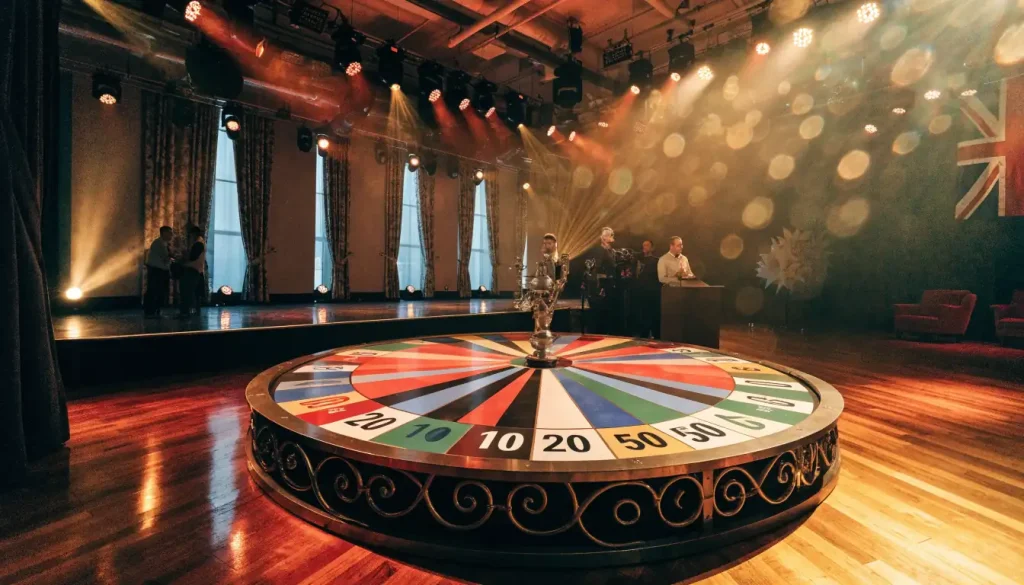
Understand how operator licensing, demo play and the game’s rules shape Crazy Time’s place in the UK live casino market.
The UK Casino Framework Behind Crazy Time
A casino offering Crazy Time to customers in Great Britain sits within a system that regulates the business providing the gambling, not merely the name or presentation of a game. The distinction matters. A familiar title does not establish that the casino carrying it is authorised, and the location of the technology behind a website does not remove the operator from British rules.
The UK Gambling Commission oversees gambling activity in the United Kingdom, including online casinos. In Great Britain, it is the sole regulator for commercial gambling. The Gambling Act 2005 provides the principal framework in England, Wales and Scotland; Northern Ireland has a separate legal position. These boundaries matter because “UK” is often used casually as though every part of the country shared one identical gambling regime. It does not.
For remote gambling, the key point is where the service is offered, not where the server or other essential equipment happens to be. An operator serving consumers in Great Britain must hold the relevant Gambling Commission licence even if its technical infrastructure is based elsewhere. The internet may make distance seem like an answer to regulation. In this case, it is not.
What a licence attaches to
The Commission grants operating licences to businesses and personal licences to individuals working in relevant roles in Great Britain. These are different permissions with different subjects: one authorises a business to conduct specified gambling activity; the other applies to people whose work falls within the licensing system. A personal licence is not a substitute for the company’s operating licence, nor does a game’s presence on a website prove that the website is properly authorised.
For a casino that offers Crazy Time, the relevant question is therefore whether the operator has the appropriate permission to provide remote gambling to Great Britain consumers. The licence belongs to the regulated business and covers its authorised activity. It does not transform every feature on a site into a separately licensed product, and the game’s branding does not stand in for the operator’s legal status.
Deal or No Deal Casino UK: Games and Format
That allocation of responsibility reflects a wider feature of regulated gambling: the public-facing experience may look like entertainment, but the legal duty rests with identifiable businesses and, in some roles, individuals. The show-like appearance of a casino game does not make the operator’s obligations theatrical. The paperwork remains real.
The Commission’s role is not confined to premises or equipment physically located in Britain. Its remit over remote gambling offered to Great Britain consumers follows the market being served. This principle is particularly relevant to online casinos, where a company may operate across borders and where a website can be reached from several countries. Accessibility alone is not the same as authorisation. The operator must have the required licence for the British market.
The practical meaning of regulation
A licence places a casino within the British regulatory system. It means the operator is subject to the Commission’s oversight in relation to the gambling activity it is authorised to offer. It is not a general endorsement of every commercial claim, nor a promise that a customer will win or avoid disappointment. Regulation establishes responsibilities and a route of accountability; it cannot make chance obedient.
That distinction can be easy to lose amid polished branding. A casino may present a game with confidence and familiar imagery, but the presentation tells little about the legal identity behind the account or website. The regulator’s framework is intended to attach obligations to the operator rather than leave customers to infer legitimacy from appearance. A recognisable game name is not a regulatory credential.
Before depositing, the licence number should be checked against the UK Gambling Commission’s public register. That step is not a substitute for understanding the service, but it ties the claim of authorisation to the regulator’s own record rather than to a badge or statement displayed by the casino. It is a small act of verification with a rather less glamorous subject than the game itself.
Verify Operator Licence
- Find the licence number on the casino website
- Search for the number in the UK Gambling Commission’s public register
- Match the listed business and website details with the casino
British regulation also places the operator at the centre of responsibility for the gambling it provides. The Commission issues licences to businesses and individuals, while the operator remains the entity offering the remote service to customers. For someone looking at Crazy Time online, this is the legal frame behind the screen: the casino’s permission matters more than the game’s styling or the location of the equipment.
The framework should not be mistaken for a promise of safety without limits. Gambling remains a financial risk, even when offered through a regulated business. Only gamble what can be afforded to lose. That warning is not an escape clause for operators; it is a plain recognition that licensing governs the service, not the outcome of play.
In that sense, regulation is less visible than the game and more consequential than its set dressing. The British system asks who is offering the gambling, under what authority, and to whom. For Crazy Time casinos serving Great Britain, those questions come before the spectacle. The screen is only the surface.
Crazy Time Online: A Live Show in a Casino Setting
Crazy Time online sits at the meeting point of two familiar ideas: the casino game and the broadcast entertainment format. In a live-casino lobby, a game is presented through a video stream rather than only through static graphics or a conventional digital interface. The result borrows the atmosphere of a public performance while remaining part of an online casino’s wider collection of games. The screen is the room; the stream supplies its stage.
Crash Casino Games in the UK: How to Assess Them
That distinction matters. “Live” describes the mode of presentation, not a guarantee of social intimacy or a return to the old casino floor. The player is not standing beside a table, reading the room, or sharing the same physical space as a presenter. Instead, a camera mediates the encounter. The format makes a casino experience visible and immediate, but it also makes it distinctly domestic: a public spectacle arriving through a private screen.
Britain had live-casino games before Crazy Time became part of the online vocabulary. Grosvenor first introduced its live casino games in 2013, with card and casino titles including Blackjack, Texas Hold’em and Roulette. That offering placed recognisable games into a streamed setting. It also marked a wider shift in how a casino could be encountered: not only as a building with doors, staff and tables, but as a service delivered through a screen.
There is a small social history in that shift. The casino has long depended on ceremony as much as on equipment: a visible table, a dealer, the turn of attention around a shared event. Online delivery could have stripped that away and left only a software interface. Live presentation instead preserves some outward signs of a hosted occasion. The setting is no longer a room one enters, but it can still look and feel like an event arranged for an audience.
Crazy Time online casino play belongs to this mediated world. Its appeal as a live product is not simply that it appears on a casino site; it is that the online environment frames the experience as something being presented in real time. The screen joins the casino’s catalogue to the visual language of broadcast entertainment. That is a different proposition from a traditional table game, even when both are encountered through the same account and lobby.
Live Casino History
Grosvenor first introduced live casino games in the UK in 2013, offering streamed versions of titles such as Blackjack, Texas Hold’em and Roulette.
The phrase “online casino” can suggest a single, uniform experience, but the category contains several kinds of presentation. Some games are built around a digital table and familiar casino conventions. Others put greater weight on spectacle and hosting. In a live-casino environment, the stream becomes part of the product’s identity: it shapes what the game looks and sounds like, and how the audience understands its place among other casino offerings.
This is also why Crazy Time can be discussed as a live show without treating it as a television programme in the ordinary sense. It is encountered within a gambling service, not as a scheduled broadcast detached from wagering. Entertainment conventions lend it a recognisable frame, while the casino setting supplies the commercial purpose. The two elements sit together, but they are not interchangeable. A show can be watched; a casino game is offered as part of gambling.
The difference can be easy to overlook because the interface compresses several institutions into one screen. A casino lobby, a live stream and a game presentation may appear as neighbouring parts of a single experience. Yet each carries its own history: the casino as a regulated commercial venue, broadcasting as a form of public entertainment, and online services as a means of bringing both closer to the home. The technology changes the distance. It does not erase the distinctions.
Online Casino Games for Real Cash in the UK
For British players, the live-casino format therefore has a history of its own, rather than being merely a new skin placed over old games. Grosvenor’s 2013 launch shows that established casino titles were already being presented live online well before today’s more theatrical products entered the conversation. Crazy Time belongs to a later, more visibly show-oriented strand of that development, where the casino experience is packaged as a performance as well as a game.
The camera does some of the work. The rest is expectation.
Top online casinos in the UK
- AmunbetBonus: Join now and get 450% up to 2,700 GBP + 450 FS · Payout speed: 1-3 business days
- ZombillionBonus: Welcome Pack 250% up to £4000 + 200 FS · Payout speed: 1-3 business days
- NightLuckBonus: Welcome Pack + 805% Up To 6400€ + 280 FS · Payout speed: 1-3 business days
- WinBeastBonus: €5000 + 500 FS + €650 Freebet · Payout speed: 1-3 business days
- x3betBonus: Welcome Pack 100% Up to £1.000 + 200 Free Spins · Payout speed: 1-3 business days
- JetsetspinsBonus: 200% Bonus + 100 Free Spins + Free Royal Wheel · Payout speed: 1-3 business days
- SpinFormulaBonus: 550% Up To £15,000 + 550 FS · Payout speed: 1-3 business days
- BritsinoBonus: Welcome Package – Get your £2,200 + 2,000 FS · Payout speed: 1-3 business days
Assessing a Crazy Time Casino Site Without a Best-of List
A list of the “best” Crazy Time casinos would suggest a comparison built on evidence: consistent checks of licensing, account protections and the way each operator handles complaints. Without that groundwork, a ranking is decoration. The more useful question is whether a casino offering Crazy Time behaves like a properly accountable gambling business.
In Great Britain, remote operators serving consumers must hold the relevant licence from the UK Gambling Commission. A casino’s own statement that it is licensed is not the final check. Before depositing, the operator’s licence number should be looked up on the Commission’s public register, and the listed business and website details should match the casino being assessed. A familiar name or polished site is not a substitute for that match. If the details do not line up, the sensible response is to pause rather than explain the discrepancy away.
Do
- Check the UK Gambling Commission public register
- Set a financial limit before the first deposit
- Use available self-exclusion tools
Don’t
- Rely on a familiar name or polished site
- Ignore the terms attached to a bonus
- Infer legitimacy from a recognisable game name
Licensing matters because it connects a gambling account to obligations, not merely to a logo in a footer. Operators must verify a customer’s age before allowing a deposit. They must also prompt new customers to set a financial limit before the first deposit and make account-level limit controls accessible. These are practical signs of a system designed to put some distance between an impulse and a payment. Their presence does not make gambling harmless; it does make the operator’s responsibilities more visible.
Account safeguards are worth inspecting before any money is involved. UK-licensed casinos must provide responsible-gambling tools, including self-exclusion. The controls should be findable from the account area, not buried in a maze of promotional pages. A site that makes it hard to locate the means of restricting or closing an account presents a poor picture of its priorities, whatever its game catalogue looks like.
There is also a formal route for disputes. UK Gambling Commission licensees must have an internal complaints process and provide access to an approved Alternative Dispute Resolution service. That gives a complaint a structure beyond repeated messages to customer support. The terms should explain how to raise a concern and what happens if the operator’s own process does not resolve it. Clear procedures are not proof that every dispute will end in a player’s favour. They are evidence that a process exists.
Promotional language deserves a separate, cooler reading. A casino may use bonuses to make an offer appear more generous, but a headline is not the whole offer. The conditions attached to a promotion determine what accepting it means. For an assessment of the casino itself, the relevant point is whether those terms are accessible and understandable, rather than whether a bonus sounds large. A bonus cannot repair a missing licence or weak account safeguards.
The same caution applies to claims about Crazy Time results. A casino page may present game information or promotional material, but confident wording is not independent evidence of how future play will turn out. Past results, where displayed, should not be treated as a promise about what follows. They are not a shortcut to identifying a reliable operator, either.
Casino Dice Games in the UK: How They Work
A sound assessment is therefore less like choosing a favourite and more like checking the paperwork behind a public-facing business: licence details, age controls, limits, self-exclusion and a route for complaints. No single feature makes a casino safe for everyone. Gambling should be limited to money that can be afforded to lose. The distinction is plain.
Where Crazy Time Fits Among Live Casino Games
A live-casino lobby is a catalogue, not a single room. Its divisions may separate familiar table games from newer entertainment formats, with titles also grouped by provider or made available through a search field. The precise arrangement depends on the casino interface, but the distinction matters: a game can be part of the live offering without sitting beside blackjack or roulette in the menu.
For anyone looking for Crazy Time, the practical route is to open the live-casino area and search for the game by its title. If the lobby uses categories rather than a broad catalogue, a section labelled for live games or game shows is a sensible place to look. Search tools can be useful when a site carries a crowded selection; browsing by category gives a clearer sense of the company the game keeps. Neither route establishes that a particular casino offers it. The available catalogue is specific to the operator.
Crazy Time’s wheel imagery can also make it tempting to assume that the title belongs with every other wheel-based game. A casino interface may group titles by theme, format, or provider, and those groupings are not universal. The game’s position in a lobby is therefore a matter of catalogue design, not a reliable guide to its rules or to how it compares with table games. Finding it is a matter of navigation; understanding its format is a separate matter.
The live-casino category has a longer relationship with established card and table games. Grosvenor introduced its live casino games in 2013, with a selection that included Blackjack, Texas Hold’em and Roulette. That early emphasis reflects a familiar function of the format: bringing recognisable casino tables into an online setting. The later catalogue is broader in character, with game-show-style titles sharing space with games whose names have long been part of the casino vocabulary.
Mines Casino Game in the UK: Rules and Play
That coexistence is worth noticing. A live lobby brings different traditions under one digital roof: the table game, organised around recognisable rules and play, and the entertainment-led title, presented as a distinct kind of attraction. The category label may flatten those differences, but it does not erase them. A row of thumbnails is a rather efficient piece of cultural compression.
A casino’s live section can also contain several versions or presentations of established games. That can make browsing by title more useful than browsing by broad category, especially where the same familiar game appears in more than one form. Conversely, a category view helps show whether a lobby is built mainly around classic tables or offers a wider mixture. These are observations about the catalogue, not a ranking of casinos.
The search for a place to play Crazy Time is therefore best understood as a catalogue question: whether the title appears in the live offering, and where the operator has filed it. No single menu label can be assumed across casinos. The game may be discoverable through a title search or a live-game category, while the neighbouring titles offer a glimpse of the wider selection. A live casino is a collection, not a guarantee that every game is present.
Any browsing or play should remain within money that can be afforded to lose.
Strategy Without the Illusion of Control
A Crazy Time casino strategy can sound like a promise of mastery: observe, calculate, choose, and somehow make uncertainty behave. The more useful meaning is quieter. Strategy is a way to decide in advance what gambling is allowed to take from a person’s time, attention and money. It cannot make an outcome obey.
That distinction matters in a live casino, where a visible presenter and a shared event can make chance feel unusually personal. A sequence may look as though it is gathering momentum, or as though a change is overdue. Neither impression is a reliable instruction. Past outcomes describe what has already happened; they do not create a debt that the next round must repay.
Financial Risk
Gambling remains a financial risk even through a regulated business; only gamble what you can afford to lose.
This is also the limit of a Crazy Time casino tracker. A tracker may organise previous results into a chart or running record, but a chart is not a forecast merely because it is neat. Repeated colours, streaks and gaps invite the mind to complete a pattern. That habit is human, not evidence of a hidden signal. A tracker can help someone review their own behaviour; it cannot turn observation into control over what comes next.
The same caution applies to Crazy Time casino trackers that present records as a basis for choosing when to continue. Information about earlier rounds may be interesting, but it does not remove uncertainty from a future wager. The practical question is not whether a pattern looks persuasive. It is whether the next decision still fits the limit set before play began. If it does not, the chart has become an excuse.
A personal approach can be made more concrete without pretending to be a winning system. Decide beforehand what amount can be lost without affecting ordinary commitments, and stop when that amount is gone. Set a time boundary as well: live entertainment can make another round feel like a natural continuation, even when the original reason for playing has passed. A pause helps separate a deliberate choice from the momentum of the screen.
The word “strategy” is often used for systems that alter the size or timing of wagers. Such systems may change the pattern of spending, but they do not guarantee a favourable result. Chasing losses is especially easy to dress up as calculation: a larger wager can appear to be a route back to even, while in reality it puts more money at risk. A loss is not an appointment with a later win.
There is a social history to this language. Gambling has long been accompanied by methods that promise to make uncertainty legible, from lucky rituals to elaborate tables of figures. Their appeal is understandable: people prefer a pattern to an open question. But a method can offer comfort without offering control. The distinction is worth keeping.
Chicken Road Game Casinos in the UK: What to Know
A sensible Crazy Time live casino strategy, then, is less a recipe for outcomes than a boundary around participation. It treats entertainment as something that may end in a loss, not as income or a way to recover money already spent. Only gamble what can be afforded to lose. If the boundary becomes difficult to keep, stopping is not a failure of strategy. It is the strategy doing its job.
Crazy Time as a Casino Game Show
The phrase “game show” gives Crazy Time a different first impression from the familiar vocabulary of casino tables. It suggests entertainment arranged for viewing as well as participation: a named production, not merely a game label in a menu. That framing is useful, provided it is not mistaken for a description of particular rounds, rules or outcomes. The name alone cannot establish those details.
A casino game show sits within the larger live-casino idea, but the terms describe different things. “Live casino” identifies a broad kind of online gambling setting. “Game show” describes the style in which a particular offering is presented. The distinction is much like the one between a theatre and the production on its stage: one is the setting, the other gives a particular experience its character. The comparison has limits, but it helps explain why Crazy Time may be sought as both a casino game and a show.
That show language also changes the way the product is imagined. Traditional casino vocabulary tends to emphasise tables, dealers and familiar games. A game-show label instead brings entertainment into the foreground. It may make a casino offering feel closer to a broadcast format than to a conventional table, even though it remains part of a gambling environment. The distinction is cultural, not a promise that the experience is less serious or less consequential.
The label should not be allowed to do more work than it can bear. “Show” does not mean that participation is simply viewing, and “live” does not make gambling a harmless pastime. Nor does a theatrical presentation alter the fact that money can be lost. The atmosphere may be designed to hold attention; that is precisely why the boundary between entertainment and wagering matters. A polished presentation is still part of a commercial casino product.
In Britain, the wider setting is not outside gambling regulation simply because a game is described in entertainment terms. The Gambling Act 2005 treats a casino as an arrangement that gives people an opportunity to take part in casino games. The form of presentation does not turn that opportunity into something other than gambling. A show can be a show; its commercial context still counts.
Live Dream Catcher Casino in the UK: What to Check
This distinction helps keep expectations in proportion. Someone interested in Crazy Time as a casino game show may be responding to the idea of a more theatrical style, rather than looking for the quiet conventions associated with a card table. That interest is understandable. But a genre label cannot tell anyone how a specific game works, what choices it offers, or what will happen in a round. Those questions belong to the game’s own rules and presentation, not to the phrase “game show”.
The broader point is that casinos borrow the language of entertainment while retaining the stakes of gambling. That combination is neither mysterious nor unique to one product. It is simply an arrangement in which spectacle and wagering share a screen. The screen does not soften the arithmetic.
Any decision to take part should remain separate from the appeal of the show’s presentation. Gambling should be treated as paid entertainment, not as a way to make money, and only money that can be afforded to lose should be wagered.
Free Play and the Limits of a Demo
Free access changes the financial terms of a game, not the meaning of the experience. A free version of Crazy Time, where one is available, can offer a way to see how the presentation feels without staking money. It cannot establish what real-money play will feel like once a balance is at risk. The screen may look familiar; the consequences do not.
The phrase “free spins” can also suggest something different from a demo. It may refer to a promotional offer rather than an unrestricted practice mode, and the wording alone does not show what is being offered or on what terms. Nor does it establish that a particular casino provides either kind of access. Free play is not a feature that can be assumed across the market.
A demo is best understood as a limited encounter with a product. It may help someone decide whether the show’s pace and style hold their attention, but it says nothing about the safety of a funded account or the protections attached to real-money gambling. Those are separate questions. A free screen is not a licence, a consumer safeguard or a promise about how a paid version behaves.
JetX Casino Game in the UK: Licensing Explained
There is also a small change in attention when nothing can be lost. Without money at stake, a person may watch casually, leave at any moment, or treat the experience as background entertainment. With real funds involved, each decision carries a different weight. That difference is not a flaw in a demo; it is the boundary that makes it a demo.
For anyone exploring a free Crazy Time casino game, the sensible expectation is modest: it can show whether the format is appealing, if access is offered, but it cannot rehearse the emotional or financial reality of wagering. Free access should not be mistaken for a preview of likely results. It offers no control over chance.
If play moves beyond a free mode, the distinction becomes practical rather than theoretical. Only money that can be afforded to lose should ever be put at risk.
Bonuses, Deposits and the Rules of Paying In
A bonus attached to a Crazy Time casino account is not part of the game itself. It is an offer made by an operator, with conditions that determine whether it can be used and what happens to any resulting balance. A welcome bonus or deposit bonus may sound like extra playing funds, but the practical value depends on its terms: which games qualify, whether winnings carry restrictions, and when funds can be withdrawn. Those details belong to the offer, not the show.
A no-deposit offer also does not make an account consequence-free. Before any real-money play, the operator must verify a customer’s age, and it must prompt new customers to set a financial limit before their first deposit. Account-level limit controls must remain accessible. These are safeguards around funded gambling, not decorative settings tucked beside a bonus.
Payment rules are deliberately narrower than the list of methods a checkout page might suggest. UK-licensed casinos cannot accept credit cards for gambling, including credit-card funding routed through a money service business. They cannot accept wallet payments where the wallet lets credit-card funds be used for gambling. A familiar payment logo does not settle the question; the source of the money matters.
Payment Restrictions
Attention: UK-licensed casinos cannot accept credit cards or wallet payments where credit-card funds are used for gambling.
Bonuses can also blur the distinction between a balance that appears on screen and money available for withdrawal. A payout is governed by the casino’s terms and account procedures, while complaints must have an internal route and access to an approved Alternative Dispute Resolution service at a UK-licensed operator. That process is less glamorous than a welcome offer. It matters more when something goes wrong.
The phrase “not on GamStop” can describe a search for an account outside that self-exclusion programme, but it is not a payment feature or a bonus category. Offshore casinos operate outside the UK Gambling Commission’s regulatory system. A UK-facing operator needs the relevant Commission licence; before depositing, the licence number should be checked against the public register. The boundary is regulatory, not a clever variation on an offer.
Bonuses do not soften the basic arithmetic of gambling. Only money affordable to lose belongs in a gambling account.
Rules, Multipliers and the Slot-Stake Distinction
The word “slot” can blur important differences between casino products. A game-show presentation, a multiplier, or a score displayed during play does not by itself establish that a game is an online slot. Nor does the label settle which rules apply: that depends on the game’s classification, not on the vocabulary used to describe it.
A specialist review reports that Great Britain’s online-slot stake limits are £5 for each game cycle for adults aged 25 or older, and £2 for those aged 18 to 24. The same review says those limits do not govern roulette or blackjack. These figures should be read as that review’s account, not as a timeless description of every casino game. The distinction matters because applying a slot-specific limit to another category can give a misleading impression of the rules.
Searches for Crazy Time rules, scores or multipliers often bring together separate questions: what a game displays, how its own rules define those displays, and which regulatory category it belongs to. A multiplier is not, by itself, proof of a particular stake limit; a score is not evidence that slot rules apply.
For a trusted casino, game-specific rules and the operator’s regulatory information are separate checks. Neither a lively presentation nor the use of casino terminology replaces clear information about what is being offered. Where the category is unclear, confident guesses do little good.
Only wager what can be afforded to lose.
Trying a Crazy Time Demo Before Depositing
A Crazy Time demo, where a casino offers one, can provide a first look at the game before any money is put at risk. Its value is modest but practical: it may help someone become familiar with the screen, the pace of the presentation and the choices shown during play. It cannot establish how a real-money session will feel, or make its outcomes predictable.
Availability and the features of a demo can vary. A casino may present a free version, or offer no demo at all; the existence of a game listing does not confirm that a no-cost version is available. Nor should a demo be assumed to reproduce every condition of funded play. It is an introduction, not a rehearsal with consequences attached.
That distinction matters especially where “slot demo” language is used loosely. A label does not settle how a game is classified, and a demo alone is not evidence of its formal rules. The screen can be explored without turning the experience into a promise about future results. Nothing is learned about luck by watching it behave.
Moving from a demo to real-money play is a separate decision. Before allowing a customer to deposit, an operator must verify their age. In the United Kingdom, gambling is for adults aged eighteen and over, and the operator must hold the relevant Gambling Commission licence. A familiar interface does not replace those safeguards.
A demo is most useful when it answers a small question—whether the presentation is understandable or enjoyable—without being mistaken for a forecast. If real-money play follows, only wager what can be afforded to lose.
What are the online slot stake limits in Great Britain?
The limit is £5 per game cycle for adults aged 25 and over, and £2 for adults aged 18 to 24. These limits do not apply to roulette or blackjack.
Are online casino games licensed and regulated?
Yes. Operators offering remote gambling to consumers in Great Britain must hold the relevant UK Gambling Commission licence, regardless of where their key equipment is located.
Is LuckyPays licensed by the UK Gambling Commission?
The Commission’s public register dated 26 September 2026 does not show a LuckyPays entry under that brand or the stated domain, luckypays.io.