
The Tax Hike That Could Reshape UK Online Gambling
 Available in GB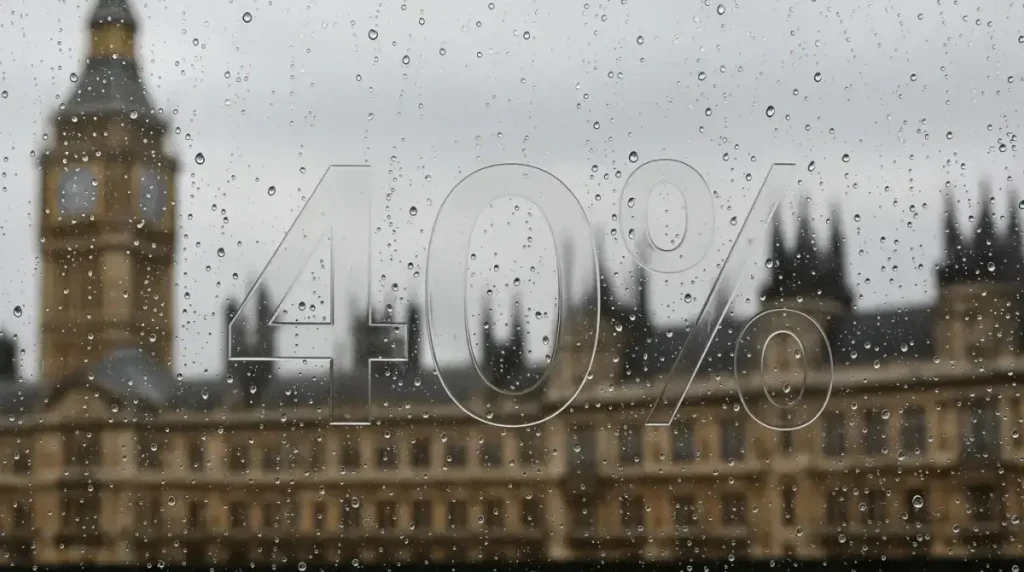
The Tax Hike That Could Reshape UK Online Gambling
In April 2026, something happened that I had been warning about for months: the UK government nearly doubled the tax on online casino revenue. The Remote Gaming Duty – the tax that every UKGC-licensed operator pays on their gross gambling yield from British players – jumped from 21% to 40%. I have covered regulatory changes across dozens of jurisdictions over nine years, and I struggle to think of a single policy shift with more potential to alter where and how UK players gamble.
The immediate effect falls on operators. But the downstream consequences flow directly to players, and they are already visible: compressed odds, reduced promotional value, and a growing economic incentive for players to seek out offshore alternatives where the tax does not apply. This is not speculation – it is a structural shift in the economics of UK online gambling, and understanding it is essential for anyone navigating the non-GamStop casino landscape.
See also: online casinos not on gamstop for a complete guide to offshore casino options.
From 21% to 40% – What the Remote Gaming Duty Increase Covers
Let me walk through the mechanics, because the details matter more than the headline number. Before April 2026, UKGC-licensed operators paid Remote Gaming Duty at 21% of their net gambling yield – essentially, the amount they retained after paying out winnings. That rate had been stable since 2019, when it was raised from 15%. The industry adapted. Margins tightened. Some operators restructured, but the ecosystem held.
The April 2026 increase to 40% is a different order of magnitude. It is not a minor adjustment – it is a near-doubling that transforms the cost structure of every remote casino, slot, and table game offered to UK players. The government’s own revenue projections tell the story of the scale involved: an expected yield of GBP 810 million in the 2026/27 fiscal year, rising to GBP 1.16 billion by 2030/31. Those are not numbers pulled from an optimistic model – they are HM Treasury’s baseline assumptions, built into the national budget.
The increase applies specifically to remote gaming – online casino, slots, and related products. It does not apply to remote betting at the same rate; however, a separate change introduces a new 25% General Betting Duty for remote betting from April 2027, up from the previous 15%. The two-stage structure means the full impact will not be felt until the second year, when both the casino and betting sides of the industry are operating under substantially higher tax rates.
For context, the UK gambling industry generated GBP 16.8 billion in total gross gambling yield during the 2024-2025 financial year – a 7.3% year-on-year increase. Remote casino, betting, and bingo accounted for GBP 7.8 billion of that total, growing at 13.1%. The government is taxing a growing sector, which means the absolute revenue take will increase even if the tax rate discourages some activity. But the question is not whether the Treasury collects more – it is whether the tax drives a wedge between onshore and offshore gambling that pushes players beyond the regulatory perimeter.
To put the rate in international perspective: France taxes online gambling operators at effective rates between 30% and 55% depending on the product, and its channelisation rate – the proportion of gambling activity that occurs through licensed operators – has been stubbornly lower than the UK’s. Italy taxes at around 25% for online casino, and its offshore market remains substantial. Denmark, with a 28% rate, maintains relatively high channelisation but with a much smaller absolute market. The UK at 40% is entering territory that has historically correlated with elevated offshore activity in every jurisdiction where it has been tested. Whether the UK’s stronger enforcement apparatus can buck that trend is the central wager the government is making.
H2 Gambling Capital’s Offshore Migration Forecast
The number that keeps me up at night is 80%. That is H2 Gambling Capital’s projection for onshore channelisation – the share of UK iGaming activity that stays within the licensed, regulated system – after the tax increase takes full effect. Before the hike, that figure sat between 92% and 93%. A drop to 80% means roughly one in five pounds wagered online by UK players could flow to offshore operators who pay no UK tax and offer no UKGC protections.
H2 Gambling Capital is the industry’s most widely cited data provider on market sizing, and their methodology – while proprietary – draws on operator-reported data, traffic analysis, and payment flow tracking across multiple jurisdictions. Their forecast suggests offshore activity could grow by approximately 110% from pre-hike levels. Not 10%. Not 50%. A projected doubling.
James Wild, Shadow Exchequer Secretary to the Treasury, put the dynamic in blunt terms during a House of Commons debate: when taxes rise too far, behaviour changes, the yield drops, and activity migrates to unregulated markets where consumer protections are weaker, fraud risks are higher, and tax revenue goes uncollected. That is not an ideological argument – it is the same logic that economists apply to any tax on a product with readily available substitutes. And offshore casinos are, from the player’s perspective, a readily available substitute for UKGC-licensed sites. The games are often identical. The software providers are the same. The payment methods overlap. The only differences are regulatory protections and tax burden – and the tax burden is invisible to the player until it shows up in worse odds and smaller payouts.
There is a counterargument worth taking seriously. Some researchers – notably a group of Nordic academics led by Virve Marionneau at the University of Helsinki – have argued that offshore market estimates are often inflated and can function as political tools wielded by an industry seeking to resist taxation. They point out that measuring offshore activity is inherently difficult, that operators have an incentive to exaggerate migration projections, and that direct comparisons between jurisdictions with different market structures can be misleading. I have covered this debate in detail, and the critique has merit. But even if H2’s numbers are directionally overstated by 20% or 30%, the trend they describe – meaningful migration from onshore to offshore – is consistent with what happened in other jurisdictions that imposed steep tax increases on remote gambling.
The UK Office for Budget Responsibility’s own analysis adds weight to the concern. The OBR expects operators to pass up to 90% of the increased tax burden onto consumers through worse odds and reduced payouts. That is not a leak in the argument – it is the government’s own assumption. If players receive measurably less value from UKGC-licensed sites, and if offshore alternatives offer visibly better returns, the economic incentive to migrate is not theoretical. It is arithmetic.
How Licensed Operators Are Adapting – Odds, Payouts, and Player Value
I spoke to an industry source shortly after the budget announcement who described the situation in terms I will not repeat in full, but the core message was: “What are operators meant to do? Their whole business model has changed – that is what needs to be understood.” That frustration is not performative. A 40% tax on gross gambling yield, applied to a product category where margins were already under pressure from responsible gambling requirements, stake limits, and compliance costs, leaves operators with a narrow set of responses.
The first and most visible response is adjusting the player-facing economics. Slot RTPs – the percentage of wagered money returned to players over time – are set by game providers, but operators choose which RTP configurations to deploy. A game might be available at 96.5% RTP or 94.5% RTP, and the operator selects the version that balances player experience against margin requirements. With a 40% tax rate eating into the operator’s share, the pressure to deploy lower-RTP configurations intensifies. Players will not necessarily notice the shift in a single session, but over time, the difference compounds. A comparison of how different licensing jurisdictions affect RTP configurations is worth examining in this context.
The second response is restructuring bonuses. Welcome offers, reload bonuses, and free spin promotions are marketing costs that operators fund from their margins. When margins shrink, promotional budgets shrink with them. Gráinne Hurst, CEO of the Betting and Gaming Council, has argued that the tax increase “handed a gift to the growing illegal operators who pay no tax and offer no protections.” She is describing the competitive dynamic at work: offshore operators, which do not pay UK Remote Gaming Duty, can afford to offer larger promotional packages because their cost base is fundamentally different.
The third response is less visible but potentially more significant: operational consolidation. Smaller UKGC-licensed operators with thin margins may not survive a near-doubling of their tax burden. Some will merge. Others will exit the UK market entirely, surrendering their UKGC licences and serving UK players – if at all – through offshore entities. This is not hypothetical; industry analysts have already identified several mid-tier operators exploring restructuring options. The long-term consequence is a UK-licensed market dominated by a smaller number of larger operators, with reduced competition and, potentially, reduced innovation in player-facing features.
None of these adaptations is unique to the UK. France’s aggressive taxation of online gambling led to a similar dynamic: reduced player value on licensed platforms, a persistent offshore market, and industry consolidation. The UK’s starting position is different – its onshore channelisation rate was among the highest in Europe – but the direction of travel follows a familiar pattern when tax rates cross a threshold that alters competitive dynamics.
There is a fourth response that is harder to document but important to flag: the shift in lobbying intensity. The Betting and Gaming Council and individual operators have significantly increased their engagement with parliamentarians since the budget announcement. The argument is not that gambling should go untaxed – the industry accepted the 21% rate – but that 40% overshoots the revenue-maximising point and will ultimately reduce the tax base through offshore migration. Whether this lobbying produces any policy adjustment remains to be seen, but the fact that the industry is mounting a sustained campaign rather than simply absorbing the cost indicates the severity of the financial impact.
£26 Million for Enforcement – The Government’s Counter-Move
The government did not raise the tax without acknowledging the migration risk. The Autumn Budget 2025 included GBP 26 million in additional funding for the Gambling Commission to combat the illegal market over the next three years. That figure sounds substantial until you consider the scale of what it is meant to address.
The UKGC tracks more than 1,000 illegal operators. Between April and December 2025, the Commission sent 327,964 URLs to search engines for delisting, issued 592 cease-and-desist notices to advertisers and operators, directed 839 websites for delisting, and saw 627 sites blocked or geo-blocked. These numbers reflect serious effort, but they also reflect the scale of the problem: for every site blocked, another can appear within days under a different domain. The illegal market, by the Campaign for Fairer Gambling’s estimate based on Yield Sec data, already controls approximately 9% of the UK online market and extracted GBP 379 million in the first half of 2025 alone.
The GBP 26 million is intended to strengthen enforcement tools and expand the Illegal Gambling Taskforce’s capacity. Whether it will be sufficient to counteract the migration pressure created by a near-doubling of the tax rate is an open question. Enforcement works by raising the cost and risk of operating illegally; taxation works by raising the cost of operating legally. If the two forces are not calibrated, the net effect can be to squeeze the legal market while the illegal market absorbs the overflow. The government is betting that enforcement can hold the line. The industry is betting it cannot.
There is a structural limitation to enforcement that the funding increase does not address. URL delisting and cease-and-desist notices are reactive tools. They target operators that have already established a presence and attracted players. The UKGC can remove a site from search results, but the players who already have accounts with that operator do not lose access – they simply use direct URLs or VPN-assisted connections. For enforcement to genuinely reduce offshore activity, it needs to disrupt not just discoverability but also payment processing and software supply chains. The GBP 26 million may help on the first front. The second and third require international cooperation that is still being built through the European regulators’ coalition established in late 2025.
What This Means for UK Players Considering Offshore Casinos
Here is the reality I wish more commentary would state directly: the 40% RGD creates a two-tier market with a visible price gap. UKGC-licensed operators will, over time, offer worse value – lower RTPs, smaller bonuses, tighter odds – because their cost base demands it. Offshore operators, paying zero UK tax, will offer comparatively better value because their economics allow it. That gap is the migration engine.
But value is not the only variable. Players who move offshore lose access to the UKGC’s complaint resolution process, GamStop self-exclusion coverage, the statutory gambling levy that funds NHS treatment services, and the compensation protections that apply when a UKGC-licensed operator fails. The Betting and Gaming Council estimates that roughly 1.5 million Britons already stake up to GBP 4.3 billion annually on the illegal market. The tax increase is likely to grow that number, not shrink it.
The situation is further complicated by timing. The 40% rate applies to remote gaming from April 2026. The 25% General Betting Duty for remote betting follows in April 2027. By mid-2027, both the casino and sports betting segments of UK online gambling will be operating under significantly higher tax regimes. The cumulative effect will take twelve to eighteen months to become fully visible in operator behaviour and player experience.
There is also a psychological dimension that economic models tend to underweight. Players who have been gambling at UKGC-licensed sites for years will not all migrate overnight. Habit, trust, and familiarity create inertia. But every session where a player notices that their usual slot now pays out noticeably less, or that the welcome offer at a new UK site is a fraction of what offshore competitors advertise, chips away at that inertia. The migration, if it happens at the scale H2 projects, will not be a sudden exodus. It will be a slow bleed – one player at a time, one disappointing session at a time – and that makes it harder to reverse once the trend takes hold.
What I tell anyone who asks me about this: understand that the value gap between UKGC and offshore sites will widen. Understand that the enforcement response, while real, has never been tested at the scale the tax increase may produce. And understand that moving offshore means trading measurably better odds for measurably less protection. The economics have changed. The trade-offs have not.
Frequently Asked Questions
See also: Gambling Act 2005 Loophole for more details on this topic.